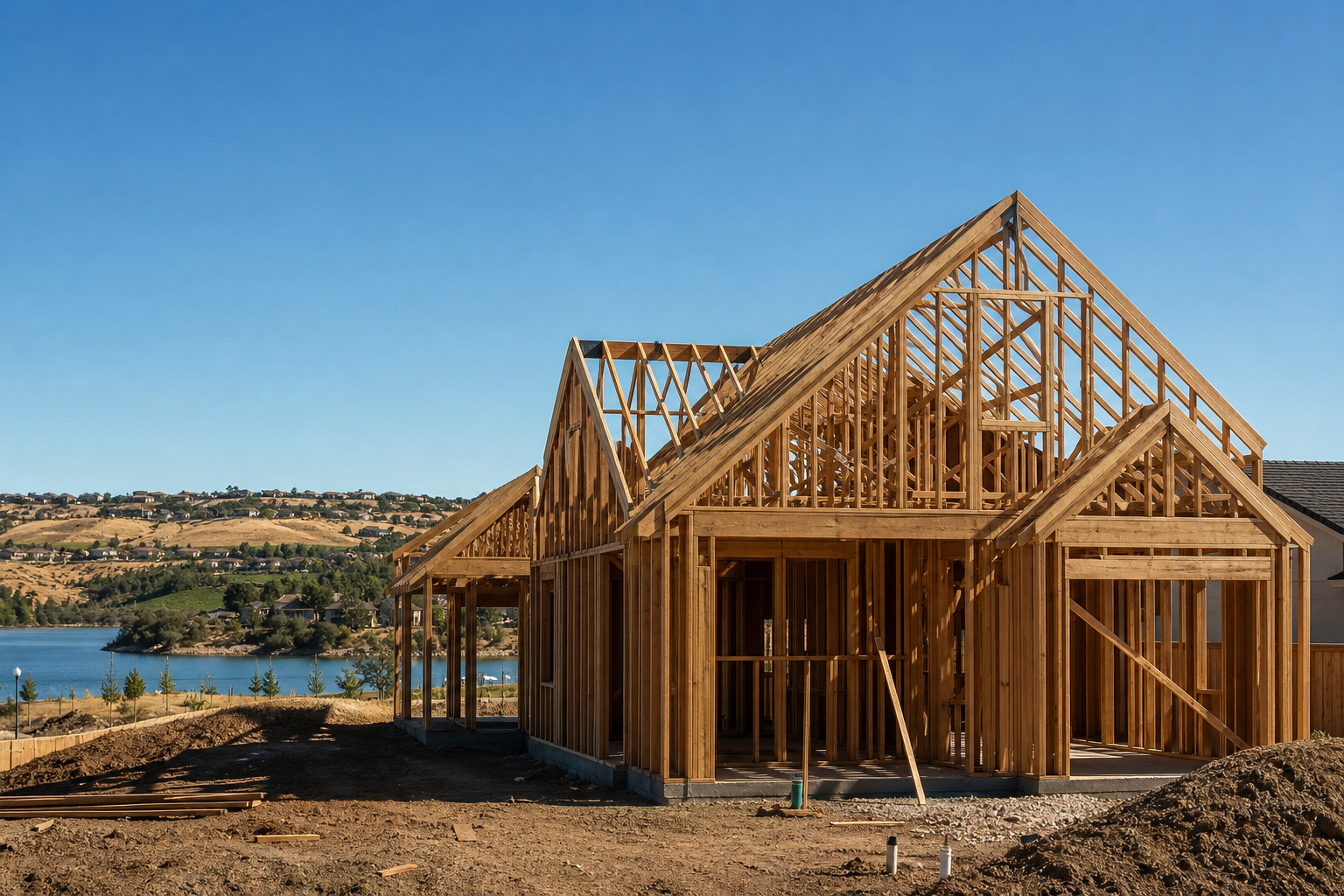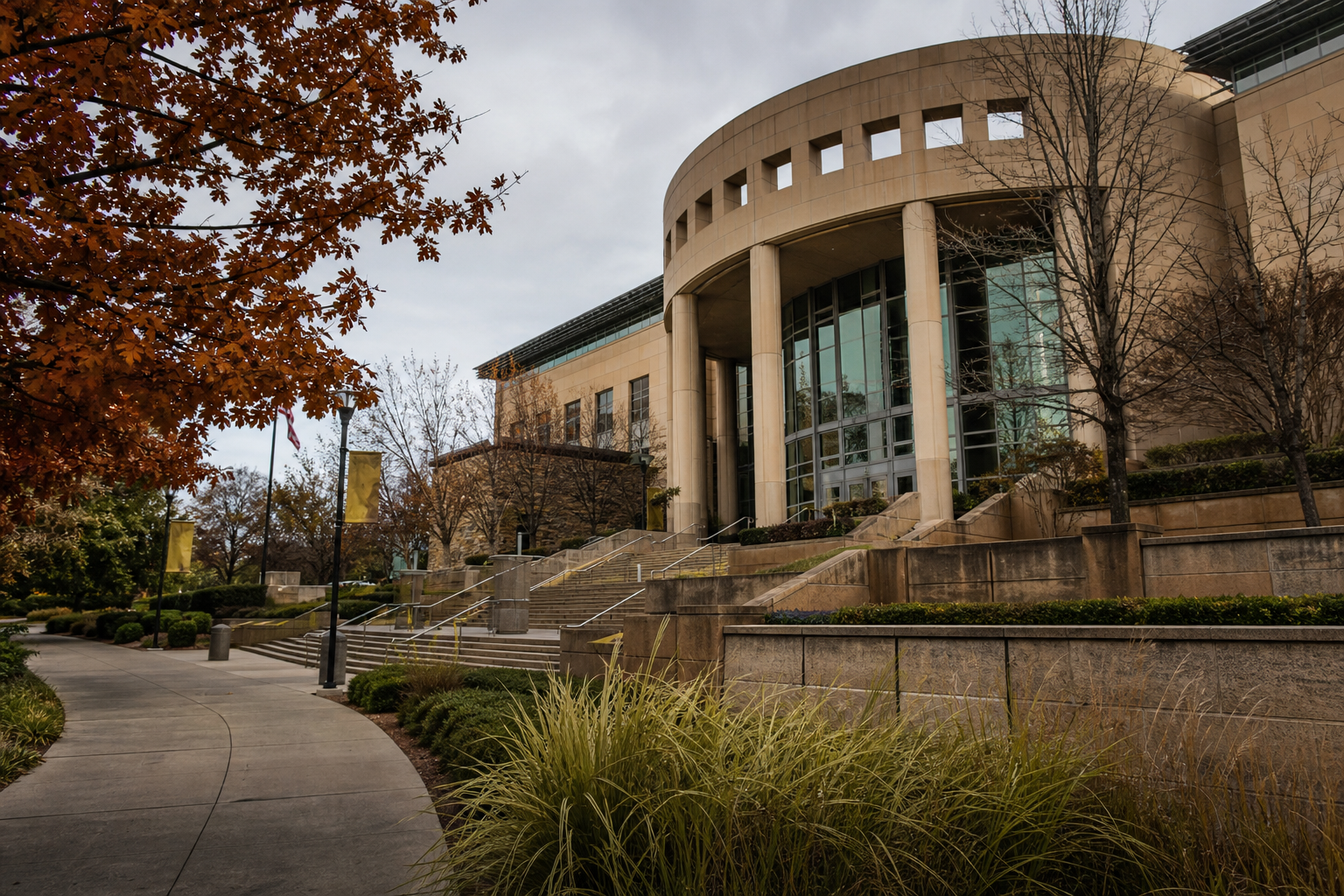
Buying an existing home in the Greater Sacramento area typically costs less upfront and closes faster, while building new offers customization but adds land, permits, impact fees averaging $95,000–$125,000 by county, construction financing complexity, and a longer timeline before you move in.
Is it cheaper to buy or build a home in the Greater Sacramento area?
For most buyers, purchasing an existing home in the Greater Sacramento area costs less overall and closes in weeks rather than years. Building new gives you more control over the finished product, but land acquisition, impact fees that can run $95,000 to $125,000 depending on the county, construction-loan carry costs, and a timeline measured in months (often 12 to 24 or more) add up fast. The right answer depends on your budget, your flexibility, and exactly where you want to land.
Key Takeaways
Recent local market data shows median sale prices for existing homes ranging from $473,000 in Citrus Heights to $1,237,500 in Granite Bay, giving buyers a wide range of entry points without the wait of a new build.
A 2025 regional fee study by the North State Building Industry Association reports average total impact fees of approximately $125,000 in El Dorado County, $114,000 in Yolo County, $109,000 in Sacramento County, and $95,000 in Placer County for new homes on standard-sized lots.
Sacramento County’s transportation mitigation fee alone ranges from $1,132 to $1,800 per single-family home depending on finished square footage, effective July 1, 2026.
Building requires construction financing with staged draws and inspections before converting to a permanent mortgage, a fundamentally different process than financing an existing home purchase.
Jurisdiction matters more than the county label: the City of Sacramento, unincorporated Sacramento County, Elk Grove, Folsom, and other municipalities each impose different fee schedules, so the same county can produce very different total costs.
What does it actually cost to buy an existing home in the Sacramento area?
When you buy a home in the Sacramento area, the purchase price is the biggest number, but it is far from the only one. Recent local market data shows median sale prices across the region ranging from $473,000 in Citrus Heights all the way to $1,237,500 in Granite Bay. That spread matters, because a home in the Sacramento area is not a single price point.
Here is the current picture across eight of the most active markets I work in:
Roseville: The median sale price is $606,000, with homes spending a median of 17 days on the market.
Folsom: The median sale price is $740,000, with a median of 38 days on the market.
El Dorado Hills: The median sale price is $898,000, with homes spending a median of 46 days on the market.
Rancho Cordova: The median sale price is $563,000, with a median of 26 days on the market.
Citrus Heights: The median sale price is $473,000, with homes spending a median of 47 days on the market.
Orangevale: The median sale price is $550,000, with a median of 48 days on the market.
Granite Bay: The median sale price is $1,237,500, with homes spending a median of 56 days on the market.
Rocklin: The median sale price is $720,500, with a median of 49 days on the market.
These are area-level medians from recent local market data (trailing approximately 90 days, as of October 2026). An individual home’s value depends on condition, street, build year, and timing, but they give you a real baseline for comparison.
What other costs come with buying an existing home?
Beyond the purchase price, buying an existing home in California involves lender charges, an appraisal, title-company services, a title insurance policy, prepaid property taxes and homeowner’s insurance, and inspection fees. The Consumer Financial Protection Bureau provides a plain-language breakdown of what appears on a Closing Disclosure. You may also budget for repairs or updates after move-in, something a new build typically avoids in the short term.
The California Documentary Transfer Tax applies at $1.10 per $1,000 of taxable consideration (excluding liens remaining on the property). How that tax is allocated between buyer and seller is a contractual matter, it is commonly negotiated between the parties, often times the Seller, but do not assume either side automatically pays it.
For a deeper look at what closing involves on the buyer side, my post on cash needed to buy a house in the Greater Sacramento area walks through the categories in detail. And if you want to understand how title and escrow fit into the process, this overview of title and escrow for Sacramento Area buyers covers what a title company actually does at closing.
One thing I always appreciate about the existing-home path: the timeline is predictable. In Roseville, for example, recent data shows homes selling in a median of 17 days. From accepted offer to keys in hand typically runs 30 to 45 days when financing is in order. That speed matters if you are working around a lease, a job start date, or a school year.
What does it cost to build a home in the Greater Sacramento area?
Building new gives you a home built to your specs, but the cost structure is completely different, and in my experience the sticker shock usually comes from fees and financing, not just construction.
Land, design, and site costs
Before a single wall goes up, you need land. Raw or semi-improved lots in the Sacramento region vary enormously by location, size, and whether utilities are already stubbed to the property. A lot in a partially developed Placer County subdivision will price differently than a rural parcel in El Dorado County or a remaining infill lot near Rancho Cordova. There is no single regional land-price dataset I can point you to, this is exactly the kind of due diligence that requires a local agent and a title search, not a Google search.
Once you have land, a credible build budget should include:
Due diligence and surveys (soil testing, boundary survey, title report on the land)
Design and engineering (architectural plans, structural engineering, energy compliance)
Grading and site work (clearing, grading, drainage, sometimes significant if the lot is sloped or raw)
Utility connections (sewer or septic, water, gas, electric, rural lots can make this expensive)
Permits and plan check fees
Impact fees (see below, this is often the biggest surprise)
Construction (hard costs, builder overhead, contingency)
Landscaping, appliances, and finishes not included in the base contract
Financing carry costs during construction
How much are impact fees in the Greater Sacramento-area counties?
Impact fees are one of the most underestimated costs in a new build, and they vary significantly by jurisdiction. The 2025 North State Building Industry Association regional fee study reports average total fees for new homes on standard-sized lots at approximately:
El Dorado County jurisdictions: ~$125,000
Yolo County communities: ~$114,000
Sacramento County jurisdictions: ~$109,000
Placer County communities: ~$95,000
These are study averages across multiple fee categories and jurisdictions, not a guaranteed charge for your specific parcel. Site-specific factors like traffic mitigation, school fees, utility connections, grading, and septic or well requirements can push the number higher or lower. Always get a fee estimate from the specific city or county planning department before you commit to a lot.
To give you a sense of how the individual fee layers stack up, the Sacramento County Transportation Mitigation Fee Program, effective July 1, 2026, lists transportation fees for single-family homes ranging from $1,132 for homes at or below 800 square feet to $1,800 for homes above 2,400 square feet, and that is just one line item.
The Sacramento County regional comparison memorandum reports affordable-housing fees at $3.91 per square foot in unincorporated Sacramento County, $3.56 in the City of Sacramento, $3.00 in Folsom, $3.18 in Elk Grove, and $3.85 in West Sacramento, with a proposed $2.84 per square foot for Placer County in fiscal year 2026–27. Verify the adopted schedule for your specific jurisdiction and permit date before treating any of these as fixed.
The City of Sacramento also publishes a Residential Fee Estimate form for new construction that illustrates how housing impact fees, sewer and water tap fees, and project-area charges layer together. Sacramento County also maintains a land-use fee schedule and a development-fee deferral program that may provide waivers or deferrals for qualifying projects, worth checking if you are building in unincorporated Sacramento County.
The bottom line: impact fees alone can add $95,000 to $125,000 to a build cost before you account for land, construction, or financing. That is a real number, not a rounding error.
How does financing a new build differ from buying an existing home?
This is where the two paths diverge most sharply, and it is something I walk every client through carefully before they commit to either direction.
When you buy an existing home, you get a standard mortgage secured by the completed property. Underwriting, appraisal, and closing happen in a concentrated window, and you have a predictable monthly payment from day one.
Building typically requires a construction loan first. Construction loans fund in stages (called draws) as work is completed and inspected. During the build, you generally pay interest only on the amount drawn, but you are paying that interest while you are still paying rent or a mortgage somewhere else. Once construction is complete, you either convert the construction loan to a permanent mortgage or replace it with a new one. The underwriting requirements, rate-lock terms, reserve requirements, and lender options are different from a standard purchase loan.
For a broader look at financing structures available in this market, my post on Sacramento-area home financing options covers several of the loan types that come into play. Because I also hold a REMLO license with Texana Bank, I can talk through both the real estate and the financing side of a build or purchase in the same conversation, that combination is genuinely useful when you are comparing paths this different from each other.
So which path actually costs less?
Honest answer: it depends on the specific land, the specific jurisdiction, and what you are comparing the build to. For most buyers in the Sacramento area, buying an existing home comes out ahead on total cost and timeline, especially when you factor in impact fees, construction-loan carry, and the time value of living somewhere else during a 12-to-24-month build.
Building makes more sense when you have a specific lot, a specific vision, and a realistic budget that accounts for every line item above, not just the construction contract. The biggest mistake I see is buyers comparing a builder’s base price to an existing home’s sale price without adding land, fees, financing carry, and contingency. That comparison is almost always misleading.
Every situation is different, and the only way to know which path pencils out for you is to run the actual numbers side by side. That is exactly the kind of analysis I do with clients before they make a move in either direction.
If you are weighing a home in the Sacramento area and want a straight comparison, schedule a consultation and we will work through it together. If you already own and are thinking about what your current home is worth in today’s market, request a free home evaluation and I will give you a real number to work from.
I would love for you to read what my clients say about working with me on Google and Zillow.
Frequently Asked Questions
Is it cheaper to buy an existing home or build one in Sacramento County?
For most buyers, purchasing an existing home in Sacramento County costs less overall when you account for land, impact fees averaging around $109,000 per the 2025 NSBIA regional fee study, construction-loan interest during the build, and contingency costs. Building new can make financial sense with the right lot and a detailed budget, but the total cost of construction routinely exceeds what buyers initially expect.
Are impact fees lower in Placer County than Sacramento County for a new build?
The 2025 North State Building Industry Association regional fee study reports average total impact fees of approximately $95,000 in Placer County communities, compared to approximately $109,000 in Sacramento County jurisdictions, so Placer County has generally come in lower in recent comparisons. That said, fees vary by the specific city or unincorporated area, and the proposed affordable-housing fee for Placer County of $2.84 per square foot for fiscal year 2026–27 should be verified against the adopted schedule for your project’s jurisdiction.
Do I need a construction loan to build a house in the Greater Sacramento area?
Yes, in most cases. Building a custom home typically requires a construction loan that funds in staged draws as work is completed and inspected, rather than a lump-sum mortgage. Once the home is finished, you either convert the construction loan to a permanent mortgage or replace it with new financing. The underwriting, reserve requirements, and rate-lock terms are meaningfully different from a standard home-purchase loan, so it is worth talking through your options with a lender before you commit to a lot.
Are construction-loan interest payments made during the build or after the home is finished?
During the build. Construction loans are typically interest-only on the amount drawn at each stage, so you start making interest payments as soon as funds are disbursed, not after you move in. This means you are carrying financing costs while the home is being built, often while also paying rent or another mortgage elsewhere. That carry cost is a real line item in any honest build-versus-buy comparison.
Who pays the Documentary Transfer Tax when buying a Greater Sacramento-area home?
The Documentary Transfer Tax in California is calculated at $1.10 per $1,000 of taxable consideration (excluding liens remaining on the property), but who pays it is a contractual matter negotiated between buyer and seller, often time in the Greater Sacramento Area, the Seller pays it but there is no universal rule that one side always pays. Confirm the allocation in your purchase contract, and discuss it with your agent before you make or accept an offer.
About Denise Dooley Bailey
Denise Dooley Bailey is a REALTOR® with REAL Brokerage serving Sacramento and its surrounding counties, drawing on 37+ years in the real estate industry, including decades as a title and escrow officer inside a Fortune 100 title company, to guide buyers and sellers through every step of a transaction. She also holds a REMLO license with Texana Bank, so she can advise on financing for both sides of the deal.
Contact Denise at REAL Brokerage · Call or text: 916-899-3123
Equal Housing Opportunity. Denise Dooley Bailey, CA DRE license #02195521, California Department of Real Estate. Mortgage loan origination services provided through Texana Bank · NMLS #2697905. This article is general information only and is not legal, tax, or financial advice. Confirm your own numbers with your title company, tax advisor, or lender before making any decision.